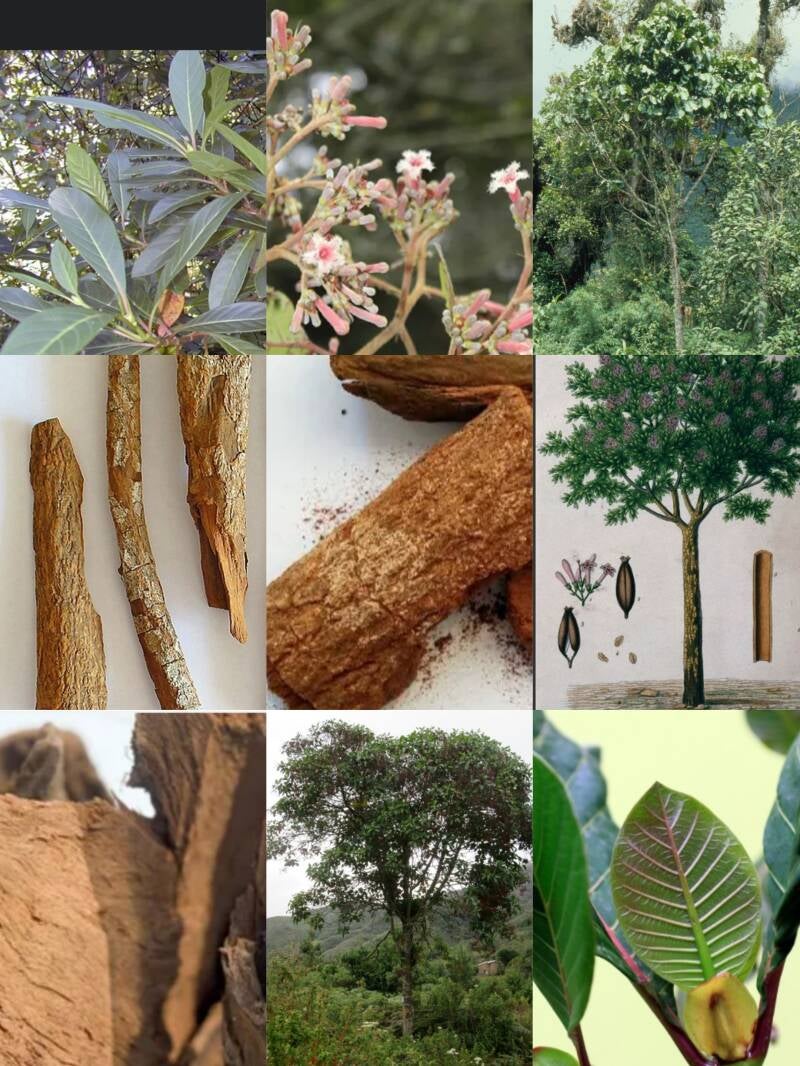
Cinchona bark
Introduction: Cinchona bark, derived from the evergreen trees of the Cinchona genus native to the Andean forests of South America, holds a rich history and significance in the realm of medicine and beyond. Revered for its therapeutic properties, the bark is a primary source of quinine, a compound renowned for its antimalarial properties.
Native to: the Andean forests of South America, this botanical treasure was once so prized for its fever-fighting properties that it sparked international intrigue and trade wars.
Rich in: Cinchona’s alkaloids have been used for centuries to treat malaria, but modern research now explores its broader potential—from digestive support to muscle cramp relief and even antioxidant protection.
As people seek trusted natural supplements for immune defense and more, Cinchona bark stands out as a classic herbal solution with a powerful legacy and promising modern uses.
Benefits listed:
- Is used to treat and prevent malaria
- Reduce fevers
- Increase appetite
- Promote digestive juices
- Treat bloating
- Muscle cramp relief
- It serves as a natural source of quinine for wellness and digestion
- Act as a mild pain reliever
Active compounds:
- Primary Alkaloids: The Powerhouse of Cinchona
- Quinine: The most famous component, quinine interferes with the malaria parasite’s ability to digest hemoglobin, ultimately killing the parasite within red blood cells. It also exerts effects on the nervous system, blood vessels, and muscles.
- Quinidine: Similar in structure, this alkaloid is a powerful antiarrhythmic medication used in cardiology for managing irregular heartbeats.
- Cinchonine and Cinchonidine: These alkaloids contribute to the bark’s bitterness and support its overall antimalarial, analgesic, and antipyretic effects.
Other Active Compounds
- Tannins: Responsible for astringency, aiding in digestive support and contributing to the bark’s use in herbal bitters.
- Flavonoids: Antioxidant compounds that help reduce oxidative stress and may support immune function.
- Glycosides: Offer mild anti-inflammatory actions and can modulate how the body processes the bark’s alkaloids
Botanical:
Cinchona is a genus of flowering plants in the family Rubiaceae containing at least 23 species of trees and shrubs. All are native to the tropical Andean forests of western South America. A few species are reportedly naturalized in Central America, Jamaica, French Polynesia, Sulawesi, Saint Helena in the South Atlantic… Wikipedia
History:
Cinchona has been historically sought after for its medicinal value, as the bark of several species yields quinine and other alkaloids. Trees in the genus are also known as fever trees because of their antimalarial properties.
These were the only effective treatments against malaria during the height of European colonialism, which made them of great economic and political importance.
Europeans appropriated indigenous peoples' contributions to medicinal knowledge about cinchona, omitting them from scientific accounts.
Mass production of quinine from cinchona funneled wealth to Europe and enforced colonial power dynamics in South America.
Quina bark was mentioned by Fray Antonio de La Calancha in 1638 as coming from a tree in Loja (Loxa). He note that bark powder weighing about two coins was cast into water and drunk to cure fevers and "tertians".
Jesuit Father Bernabé Cobo (1582–1657) also wrote on the "fever tree" in 1653. The legend was popularized in English literature by Markham, and in 1874, he also published a "plea for the correct spelling of the genus Chinchona".
Spanish physician and botanist Nicolás Monardes wrote of a New World bark powder used in Spain in 1574, and another physician, Juan Fragoso, wrote of bark powder from an unknown tree in 1600 that was used for treating various ills.
Today: but the cinchona tree is facing a battle for survival as vast swathes of forest are chopped down to make way for plantations.
The wider cinchona species is used in the production of anti-malaria medicine, quinine.
But experts say the cinchona tree is in danger of extinction due to government neglect, while many Peruvians can no longer tell it apart from fig trees or quinoa plants.
"Peru has 20 of the world's 29 cinchona species but already many of them are hard to find due to deforestation, degradation of the soil and the growth of agriculture," said forest engineer Alejandro Gomez.
"Their habitat is very fragile and they are exposed to extermination due to the burning of large areas of land to grow coffee and other crops, and also for the quality of their wood," added Gomez, who is managing a preservation project. Funding is needed. The National History Museum at the National University of San Marcos in Peru said there are only 500-600 of the Cinchona officinalis species, or colorless bark, left in the country.
Not recommended for:
during pregnancy, for children, or for those with liver, kidney, or heart conditions.
Links:
- https://www.britannica.com/science/quinine
- https://en.wikipedia.org/wiki/Cinchona
- https://vitalibrary.com/cinchona-bark-quinine-health-uses/#mechanisms-of-action-and-active-compounds-in-cinchona-bark
- https://news.cgtn.com/news/3d3d514f3063544f7a457a6333566d54/index.html
- https://www.ecosia.org/images?_sp=00000000-0000-0000-0000-000000000000&q=Cinchonatree%20picture%20#id=70177B55C4FBE71A186AD3B348943534DEBCB21C